
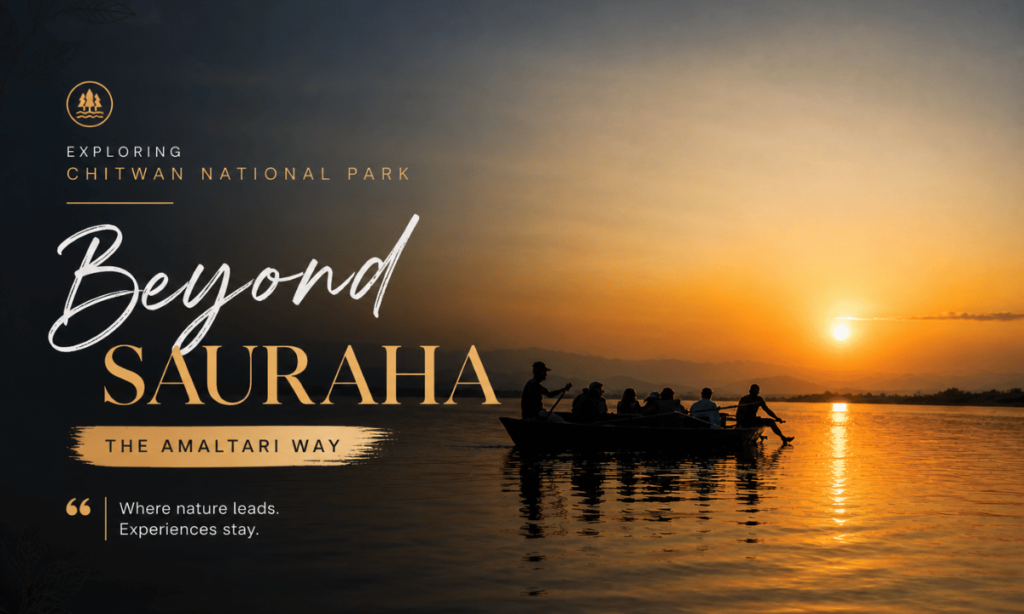
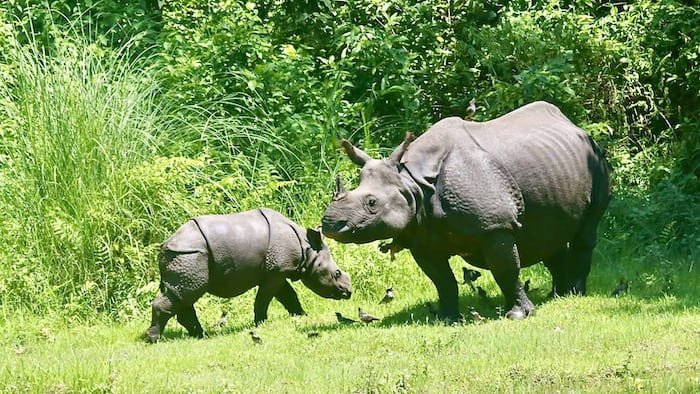
Chitwan National Park is one of the finest national parks in Asia․ It is a World Heritage Site․ Located in the lowland terai region of southern Nepal‚ the park covers an area of 952․63 sq․ km․ The parks and buffer zone cover an area of 729․37 sq․ km․ It is home to the one horned rhinoceros‚ the Bengal tiger‚ gharial crocodiles and over 550 species of birds․
Chitwan National Park is a wide-ranging wilderness area with multiple entry points‚ each providing a different and unique perspective of nature․ Of Sauraha‚ Meghauli‚ Jagatpur and Amaltari‚ Amaltari is the least disturbed and most genuine with the opening to the park at Amaltari‚ a truly wild and natural area․
Why Explore Chitwan Beyond Sauraha?
For years, Sauraha has been the quintessential entry point to Chitwan, and for good reason. However, its popularity has come with a price.
Over-commercialization: The once-quiet village has transformed into a bustling tourist hub, with an abundance of hotels, restaurants, and souvenir shops that, while convenient, can detract from the natural immersion.
Noise Affecting Wildlife: The increased human activity and vehicular traffic in and around Sauraha can disturb the very wildlife visitors come to see, pushing animals deeper into the park and making sightings less frequent or more challenging.
Shift Toward Quieter Zones: Savvy travelers and nature enthusiasts are increasingly seeking out quieter, more secluded areas to truly connect with the wilderness. The desire for a profound, undisturbed experience is driving a shift towards gateways like Amaltari, where the rhythm of nature remains paramount.
If your ideal Chitwan experience involves the lively energy of a tourist hub, then Sauraha might fit the bill. But if your heart yearns for the real Chitwan, a place where nature leads the dance and cultural immersion is genuine then Amaltari is your destination. Amaltari offers a glimpse into what Sauraha used to be 15-20 years ago: serene, authentic, and deeply connected to its natural surroundings.
Nana Jungle Resort: Your Basecamp in Amaltari
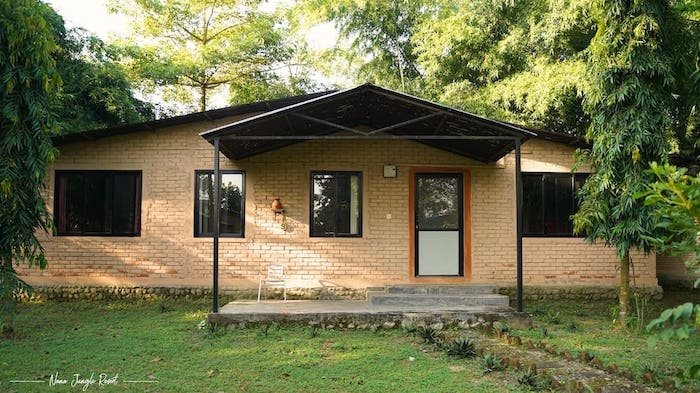
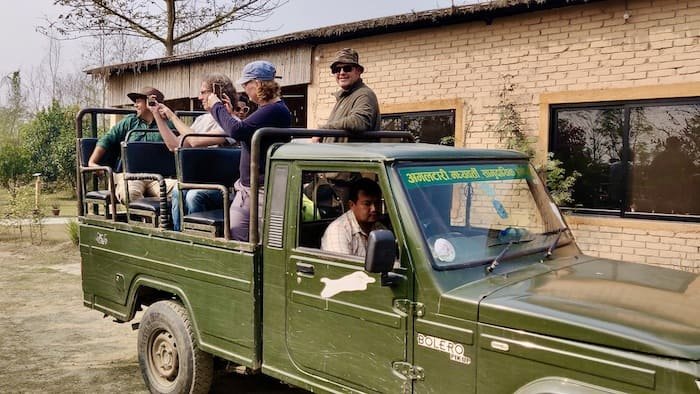
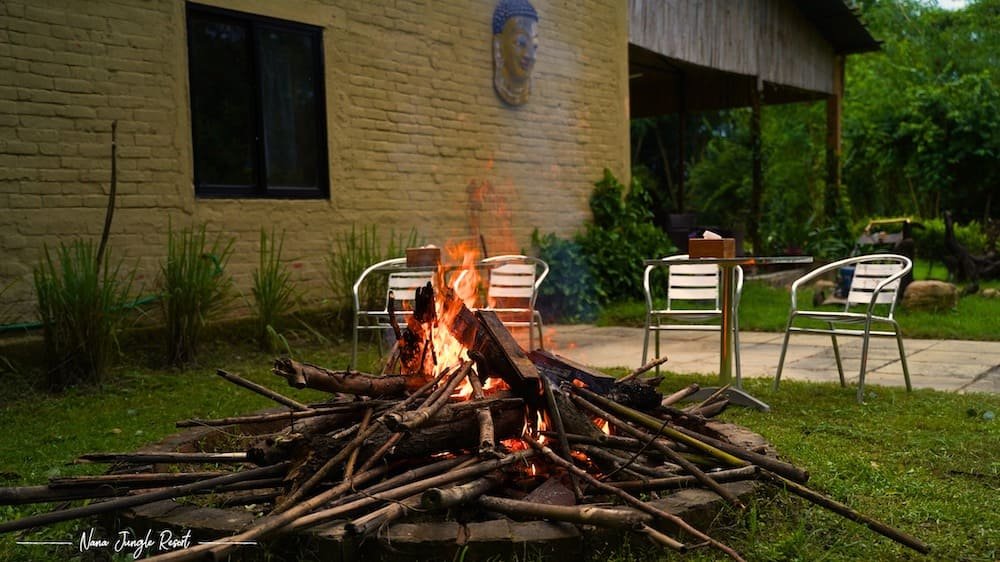
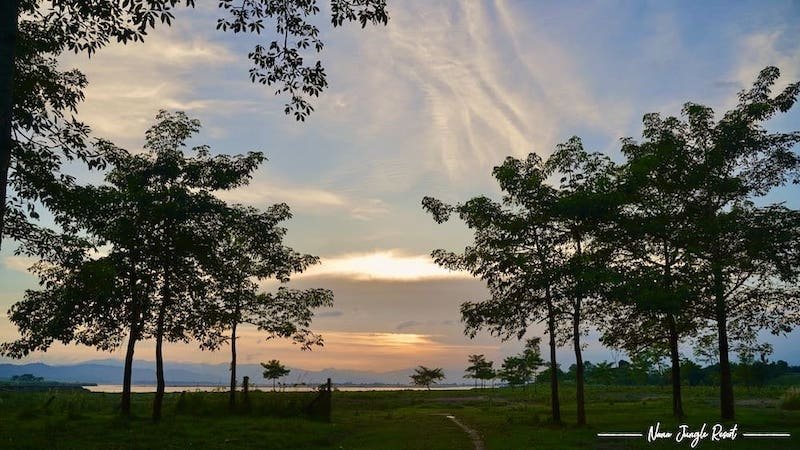
Right here in Amaltari, along the banks of the Narayani River, sits Nana Jungle Resort, a boutique jungle lodge designed for travelers who want to experience Chitwan the way it was meant to be experienced.
Location That Speaks for Itself
Nana Jungle Resort is positioned on the riverside of the Narayani River, one of the major waterways that sustains the Chitwan ecosystem. The resort sits at a unique intersection directly connected to the national park on one side and a thriving community forest on the other.
Undisturbed Wildlife Movement
Because Amaltari hasn’t experienced the level of commercial development seen in other parts of Chitwan, the wildlife corridors here remain largely undisturbed. Animals move between the national park and community forests as they have for generations, undeterred by construction or heavy traffic.
For guests at Nana Jungle Resort, this means something special: you don’t need to drive far to find wildlife. It comes to you.
Traditional Tharu Village Experience
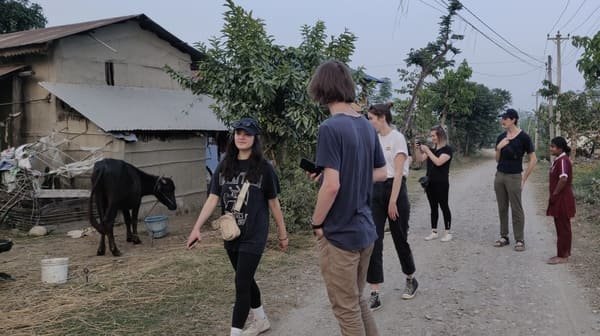

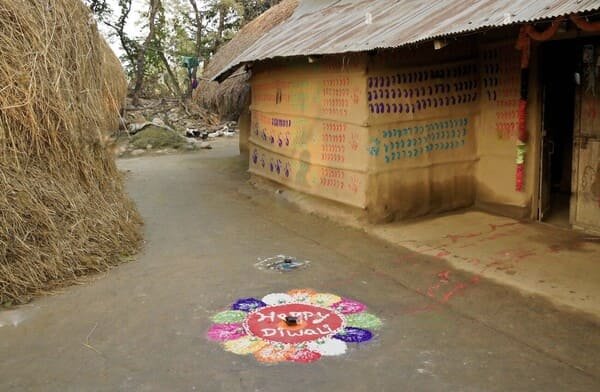
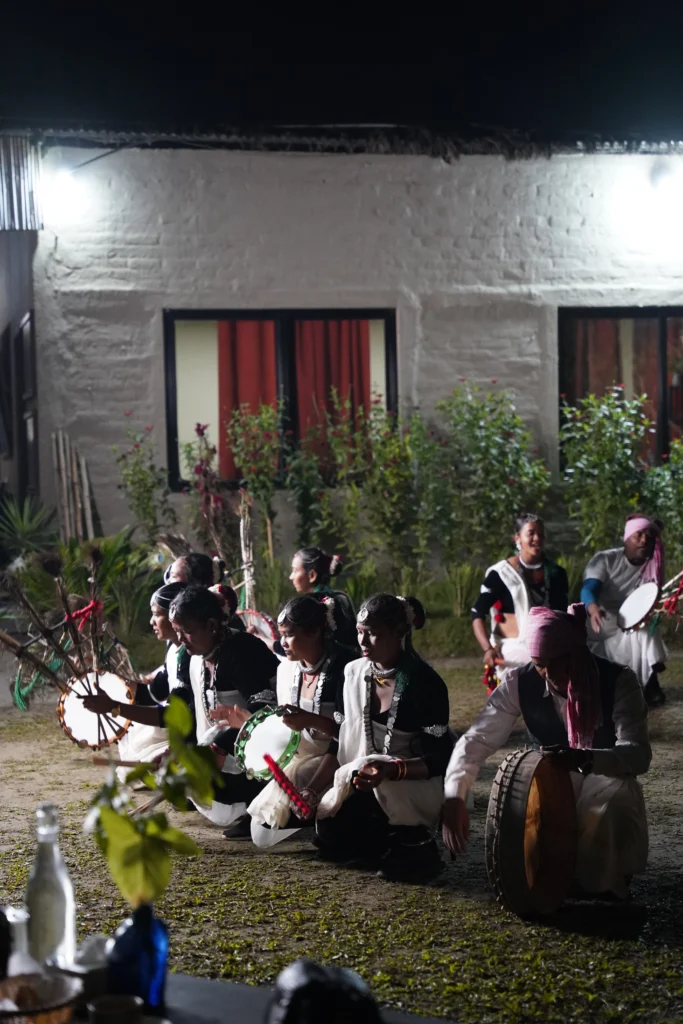
Amaltari is also home to traditional Tharu communities indigenous people whose culture and daily life are deeply intertwined with the forest and river. Unlike more tourist-heavy areas where Tharu culture is often presented as a performance, here it remains a living, breathing part of the landscape.
Nana Jungle Resort: Property Design
Nana Jungle Resort follows a chalet-style layout of individual units with two rooms connected by a shared lobby. This design is particularly well-suited for families and small groups traveling together, offering both privacy and a sense of shared space.
Unlike larger commercial properties with sprawling lobbies and impersonal hallways, the chalet layout at Nana Jungle Resort keeps things intimate, personal, and close to nature. Step outside your room, and you’re surrounded by greenery, birdsong, and the sound of the river.
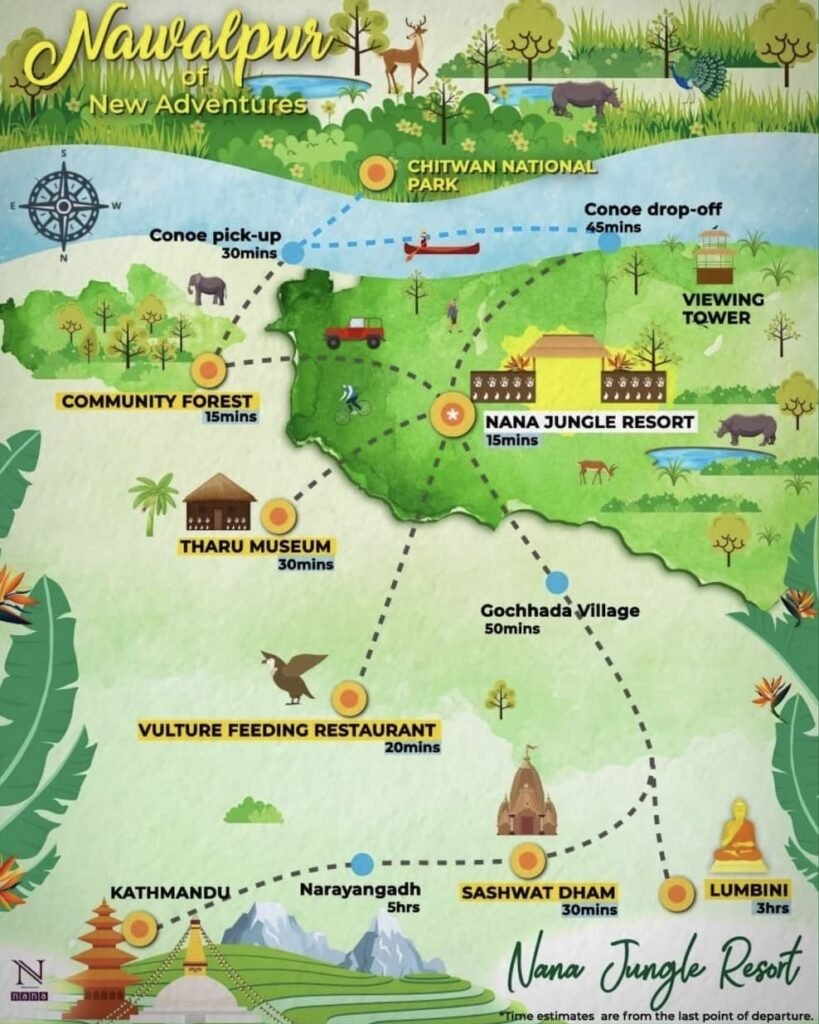
Activities at Nana Jungle Resort
Nana Jungle Resort offers a curated range of activities that go beyond the typical tourist checklist, giving guests an immersive experience of Chitwan’s natural and cultural richness.
Vulture Feeding Centre Visit
One of the unique experiences available from the Amaltari corridor is a visit to the Vulture Feeding Centre. Nepal’s conservation efforts to save its vulture population from extinction have been globally recognized, and this center offers a firsthand look at how local communities and conservationists work together to protect these critically important birds.
Big Six Safari
The Big Six Safari at Nana Jungle Resort covers the park’s most iconic species: the one-horned rhinoceros, Bengal tiger, wild elephant, gharial crocodile, sloth bear, and leopard. Guided by experienced naturalists who know the terrain intimately, these safaris offer genuine opportunities for wildlife sightings in less-crowded areas of the park.
Overnight Jungle Tower Stay
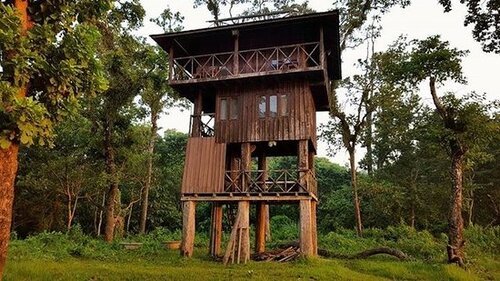
For those who want to take their wildlife experience to the next level, the Overnight Jungle Tower experience is unlike anything else. Sleep in an elevated tower deep within the jungle, surrounded by the sounds of the forest at night. It’s not for everyone but for those who crave it, it’s unforgettable.
For Inquiries, Fill Out the Form
Jungle Safari
Traditional jeep and walking safaris are available through both the national park and the community forest buffer zone. The advantage of launching from Amaltari is that you access quieter routes with fewer vehicles and a higher chance of uninterrupted wildlife encounters.
Canoe Ride on the Rapti River
A canoe ride on the Rapti River offers a peaceful, water-level perspective of the park’s riverside ecosystems. Glide past gharials basking on sandy banks, watch kingfishers dive for fish, and observe the park from an angle that most visitors never experience.
Who Is Nana Jungle Resort Best For?
Let’s be straightforward about this, because setting the right expectations makes for a better experience for everyone.
Nana Jungle Resort and the Amaltari experience are not designed for everyone, and that’s perfectly okay. If you’re looking for a quick overnight stay, a lively nightlife scene, or a high-energy tourist hub where every evening brings a new restaurant or bar to try, then Sauraha will serve you better.
But if you’re the kind of traveler who values depth over speed, who would rather spend two or three nights immersing yourself in a place rather than checking it off a list, then Amaltari and Nana Jungle Resort might be exactly what you’ve been looking for.
Here’s why: A meaningful jungle experience takes time. The forest doesn’t reveal itself in a few hours. The best wildlife sightings happen at dawn and dusk, often on the second or third morning, when the jungle has begun to recognize your presence. The cultural experiences with Tharu communities unfold through conversation and observation, not through a quick photo stop.
A stay of two to three nights allows you to:
- Settle into the rhythm of the jungle.
- Experience multiple safaris and increase your chances of encountering Chitwan’s most iconic species.
- Take the canoe ride, visit the vulture center, and explore the village without rushing.
- Actually resting is something that’s surprisingly hard to do in a busy tourist hub.
You Don’t Need Sauraha to Experience Chitwan Well
This might sound like a bold statement, but it’s one backed by the experience of countless travelers who have explored both ends of the park. For decades, Sauraha has been treated as the default entry point to Chitwan and for many visitors, it remains a perfectly serviceable one. It offers convenience, variety, and familiarity. But here’s the truth that seasoned Chitwan travelers have long understood: the quality of your jungle experience is not determined by where you stay, it’s determined by the environment you stay in.
Amaltari offers:
- Direct access to undisturbed national park and community forest corridors.
- A quieter, more ecologically intact landscape where wildlife behaves naturally.
- Cultural experiences that are authentic, not staged.
- A Boutique resort | Nana Jungle Resort – that has been purpose-built to complement, not compete with, its surroundings.
You don’t need Sauraha to experience Chitwan well. You just need to know that other options exist and that some of them might actually be better suited to what you came here for.
Final Thoughts
Chitwan National Park is a treasure, and how you choose to experience it shapes your memories. While Sauraha offers convenience, Amaltari presents an opportunity for a deeper, more authentic connection, a journey back to the essence of what makes Chitwan so special. At Nana Jungle Resort, we invite you to step away from the well-trodden path and discover the true wilderness, cultural richness, and tranquil beauty of Chitwan through the untouched gateway of Amaltari. Come, explore the real jungle with us.
FAQs
How far is Amaltari from Sauraha?
Amaltari is located on the western side of Chitwan National Park, while Sauraha is on the eastern side. The driving distance between them is approximately 60-65 km, depending on the route taken. Both serve as valid entry points to the same national park.
How many nights should I stay at Nana Jungle Resort?
We recommend a stay of 2 to 3 nights for the most rewarding experience. This allows time for multiple safaris, the canoe ride, cultural visits, and the overnight jungle tower without rushing.
What is the Big Six Safari?
The Big Six Safari is a guided wildlife tour that covers Chitwan’s six most iconic species: one-horned rhinoceros, Bengal tiger, wild elephant, gharial crocodile, sloth bear, and leopard.
Is Amaltari connected to the national park?
Yes. Nana Jungle Resort in Amaltari is directly connected to both the national park and the surrounding community forest, ensuring guests are positioned within an active wildlife movement zone.
What makes Nana Jungle Resort different from other resorts in Chitwan?
Nana Jungle Resort stands out for its prime riverside location on the Narayani River, direct access to the national park and community forest, traditional chalet layout, and commitment to offering an authentic, undisturbed jungle experience in the Amaltari corridor.