
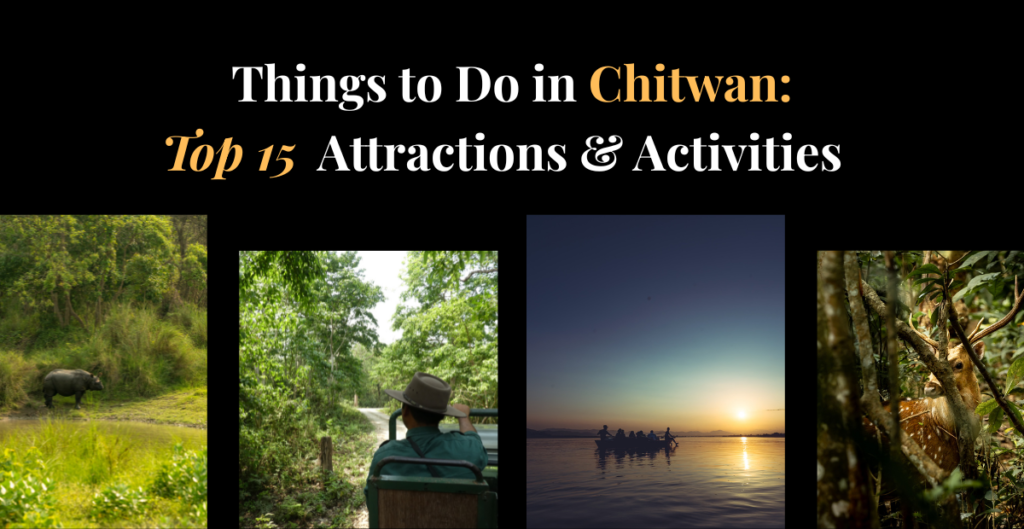
Nestled in the subtropical lowlands of southern Nepal, Chitwan is one of the country’s most beloved travel destinations, blending thrilling wildlife adventures, lush landscapes, and rich indigenous culture into one unforgettable experience. In recent years Chitwan National Park tops the list of things to do in Asia. It is an exciting jungle experience with jungle safaris, birdwatching, canoe rides and numerous other nature and jungle activities.
Whether you’re a wildlife enthusiast hoping to spot a one-horned rhino, a culture lover eager to learn about the Tharu community, or a family looking for a nature-filled getaway, Chitwan has something for everyone. In this guide, we’ve rounded up the top 15 things to do in Chitwan and Chitwan National Park to help you plan the perfect trip.
| Table of Content: |
| Why Visit Chitwan National Park? |
| Top 15 Things to Do in Chitwan 1. Jeep Safari in Chitwan National Park 2. Canoe Ride on the Rapti River 3. Guided Jungle Walk 4. Wildlife Spotting – Rhinos, Tigers & More 5. Bird Watching 6. Visit the Elephant Breeding Center 7. Explore the Gharial Breeding Center 8. Experience Tharu Culture & Village Tour 9. Enjoy a Tharu Cultural Dance Program 10. Watch a Sunset Over the Rapti River 11. Visit Bishazari Tal (20,000 Lakes) 12. Take a Pilgrimage to Devghat Dham 13. Explore Sauraha – The Gateway to Chitwan 14. Cycling & Village Biking Tours 15. Stay in a Tharu Homestay & Cook with Locals |
| A Note on Elephant Rides |
| Stay at Nana Jungle Resort – Your Home in the Heart of Chitwan |
| Best Time to Visit Chitwan |
| Engaging FAQs About Things to do in Chitwan |
Why Visit Chitwan National Park?
Chitwan holds a special place in Nepal’s history and conservation story. Chitwan National Park was established in 1973 as Nepal’s first national park. Today it is a UNESCO World Heritage Site and a thriving sanctuary for some of Asia’s most iconic wildlife. The park is home to 56 species of mammals, 49 species of amphibians and reptiles, and 525 species of birds.
Chitwan was once the exclusive hunting grounds of Nepal’s ruling class in the late 19th century, and Chitwan’s dense jungles were known for royal big-game expeditions during that time. Due to the excessive hunting and deforestation issues, by the 1960s, only a fraction of the park’s original forest remained. With the establishment of the Chitwan National Park in 1973, conservation efforts took a dramatic turn, marking a major milestone in Nepal’s environmental movement.
Top 15 Things to Do in Chitwan
1. Jeep Safari in Chitwan National Park
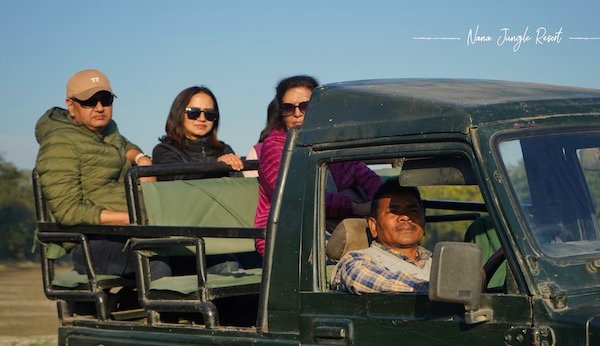
A jeep safari is the highlight of any trip to Chitwan and the most reliable way to explore the park’s core wildlife zones. Jeep safaris take you deep into the park’s core areas, offering a chance to spot wildlife in their natural habitats. Riding in an open-top 4WD vehicle, you’ll venture through dense Sal forests and open grasslands in search of incredible animals. Jeep Safari is the best way to spot rhinos, deer, and maybe even a tiger! Tours last 3-4 hours. For the best sightings, these safaris are typically scheduled in the early morning or late afternoon when animals are most active.
2. Canoe Ride on the Rapti River
Glide peacefully along the water on a traditional dugout canoe carved from a hollowed tree trunk. A peaceful canoe ride along the Rapti River drifts past gharial crocodiles and a wide variety of waterbirds in their natural habitat. It’s one of the most serene ways to experience the park’s aquatic life. Note that it’s not possible to rent a canoe here by yourself. You will have to book a guided tour.
3. Guided Jungle Walk

For a more intimate encounter with nature, a guided jungle walk lets you explore the forest on foot. Being a wildlife enthusiast, whenever you plan an excursion to Chitwan National Park, you must opt for a jungle walk. During the jungle walk, you need to be quiet and absorb everything. You’ll see the rhino footprints, tiger markings on trees, and bones of deer. You’ll also get plenty of chances to encounter other wild animals like sloth bears, crocodiles, monkeys, and lots of birds. Walks range from a couple of hours to multi-day treks, and a licensed guide is mandatory.
In order to do these walks you need to take a guide with you. There is no way around this. There are walks outside the national park which are possible, but if you want to go into the park, a guide is essential.
4. Wildlife Spotting – Rhinos, Tigers & More
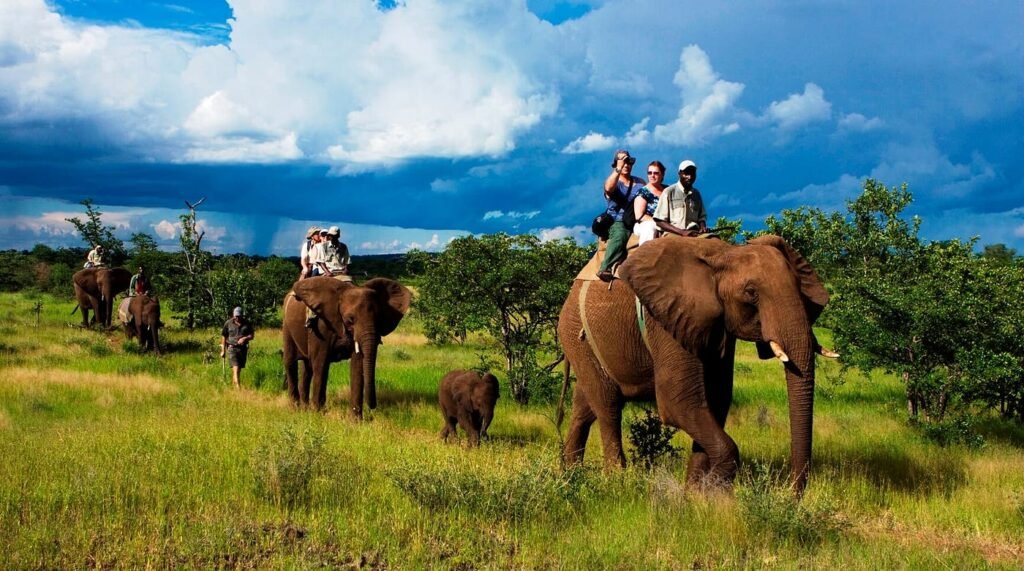
Chitwan is famous for its remarkable biodiversity. During the jungle excursion, there is a high chance of spotting rare wildlife species such as One-horned Rhinoceros, the Royal Bengal Tiger (if lucky), Leopard, Wild Boar, Forest Deer, Sloth Bear, Red Muntjac, and many other animals. Along the rivers and marshes, you’ll also spot crocodiles basking in the sun. While the jungles are teeming with wild animals like tigers, leopards and rhinos, along the marshes and rivers are gharial and marsh mugger crocodiles basking in the sun.
5. Bird Watching
Chitwan is a paradise for birders, with a spectacular variety of resident and migratory species. Birdwatching opportunities abound with over 600 species of birds recorded in the park, making it a paradise for bird lovers and photographers alike. You may spot exotic species such as the Bengal Florican, the Indian Spotted Eagle, and the Red Junglefowl. About two thirds of Nepal’s globally threatened bird species can be found here.
6. Visit the Elephant Breeding Center
A must-see attraction near Sauraha, the Elephant Breeding Center offers an educational and heartwarming experience. This centre offers visitors a unique chance to watch elephants of all ages, especially adorable baby elephants, play with their mothers. The breeding centre is not just a tourist attraction—it plays a vital role in the conservation of endangered Asian elephants. You can learn about their life cycles, feeding habits, and the ongoing efforts to protect them.
The best time to visit the Elephant Breeding Center is either in the morning or in the evening. The recommended time frame is 07:00 AM to 10:00 AM or 03:00 PM to 05:00 PM.
7. Explore the Gharial Breeding Center
Located near the park headquarters at Kasara, this center is dedicated to conserving the endangered gharial crocodile. A short walk (1km) from the National Park HQ will take you to the Gharial Breeding Center, which is also home to the Marsh mugger. The Elephant Breeding Center and Gharial Crocodile Farm, where these animals and reptiles have been successfully bred in captivity, are worth a visit.
8. Experience Tharu Culture & Village Tour
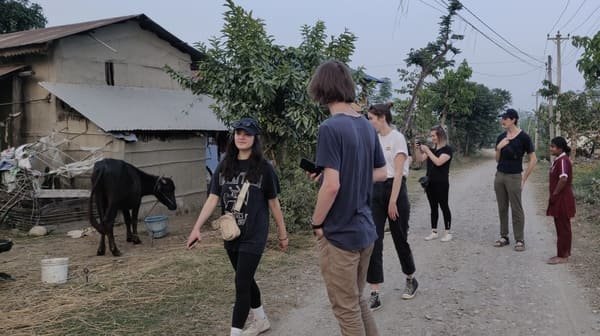
No visit to Chitwan is complete without immersing yourself in the culture of the indigenous Tharu people. Outside of the jungle premises, you can explore the nearby Tharu villages to learn more about the indigenous tribes that live around Chitwan and their culture. The Tharu people have been living in and around Chitwan National Park for hundreds of years and today, most of them depend on the national park to make a living. Explore their local villages on a guided tour and learn about their daily activities, marvel at their traditional mud houses and discover their cuisine.
9. Enjoy a Tharu Cultural Dance Program
In the evening, don’t miss the lively Tharu cultural show. The culture house offers shows featuring Tharu songs and cultural dances in the evening. It’s a pretty touristy experience, but fun nevertheless. The famous Tharu stick dance is a highlight and a wonderful way to connect with local traditions.
10. Watch a Sunset Over the Rapti River
The banks of the Rapti River offer one of the most beautiful sunset views in Chitwan.
The Rapti River is another amazing place to visit in Chitwan, especially for sunset. It’s the perfect spot for photography, quiet reflection, and unwinding after a day of adventure.
11. Visit Bishazari Tal (20,000 Lakes)
A tranquil wetland and Ramsar site, Bishazari Tal is a hidden gem for nature lovers. One of the must-see attractions of Chitwan is the Bish Hajari Taal (20,000 Lake). Located inside the Chitwan National Park, the lake is beautiful and peaceful. This lake serves as the best place for the bird-watching center. Different birds migrate to this Taal from the Northern Pole in search of a suitable environment. Moreover, the lake is home to several crocodiles, and near Bish Hajari Taal, you can often see rhinos.Since it lies just 5km south of Bharatpur, you can get there by jeep, walking, or cycling.
12. Take a Pilgrimage to Devghat Dham
For a spiritual side trip, visit the sacred pilgrimage site of Devghat.
About 6 km to the north of Bharatpur, on the way to Chitwan National Park, is a prominent pilgrimage site Devghat, at the confluence of the Trishuli and the Kali Gandaki rivers, which then
form the Narayani. Confluences of major rivers such as these are considered very holy. On the day of Makar Sankranti, the first day of the Nepali month of Magh in January, pilgrims converge here to take holy dips.
13. Explore Sauraha – The Gateway to Chitwan
Sauraha is the vibrant hub for most Chitwan visitors. Sauraha is the gateway to Chitwan National Park. Many tourists begin and end their jungle safari from this location as Sauraha is also known for its souvenir shops and the Tharu Cultural Museum. The town offers a range of restaurants, shops, and accommodations, making it a convenient base for exploring the area.
14. Cycling & Village Biking Tours
For a slower, more immersive experience, explore Chitwan’s countryside by bicycle.
From biking through Tharu villages to doing a homestay in Chitwan to cooking with the locals, there are so many more activities to do on a trip to Chitwan National Park than just going on a safari adventure. Cycling through the surrounding villages and farmland is a peaceful way to see everyday rural life.
15. Stay in a Tharu Homestay & Cook with Locals
For travelers seeking authenticity, a homestay experience offers unmatched cultural connection.
The nightly rate of the homestay is less or similar to what you’d pay for lodging near Chitwan National Park, however, this is a great example of community-based tourism in which your impact directly benefits local families. You can even join a family for a home-cooked meal.
One of the more memorable activities in Chitwan is getting to cook with a local family for the evening. From prepping the vegetables to crushing the garlic to frying the fish, it’s such a fun experience that makes your time in Terai/Chitwan all the more meaningful.
A Note on Elephant Rides
While elephant-back safaris and elephant bathing are widely offered in Chitwan, many responsible travelers now choose more ethical alternatives.
Elephant rides are available but not recommended jeep safaris are more ethical and give better wildlife views. Supporting jeep and walking safaris, park entry fees, and community tourism still directly benefits conservation. Rest assured that elephant safaris are not the only way to support the conservation work of Chitwan National Park. Your park entry fees also contribute to it, while jeep and walking safaris provide a career and livelihood for the local guides that accompany you.
Stay at Nana Jungle Resort – Your Home in the Heart of Chitwan
Make your Chitwan adventure truly memorable by staying at Nana Jungle Resort, ideally located to give you easy access to all the top attractions and activities in Chitwan National Park. At Nana Jungle Resort, we combine warm Nepali hospitality with the comfort you need after a day of exploring the wild.
Our resort offers curated jungle safari packages that include jeep safaris, canoe rides, guided jungle walks, bird watching, Tharu village tours, and evening cultural programs — all led by experienced, government-licensed naturalist guides. Whether you’re a solo traveler, a couple, or a family, our team is dedicated to crafting a personalized itinerary that lets you experience the very best of Chitwan.
Surrounded by nature and just moments from the park, Nana Jungle Resort is the perfect base to relax, recharge, and reconnect with the wild. Book your stay with us and let the adventure begin.
Best Time to Visit Chitwan
The best time to visit Chitwan National Park is generally from October to March. During these days and the cool winter season, the temperature ranges from about 7°C to 25°C with pleasant weather, clear skies, and low humidity. For seeing animals, the best time is late January to March when the villagers slash the towering grass, making it easier to spot wildlife.
Plan Your Chitwan Adventure Today
From heart-pounding jeep safaris and serene canoe rides to immersive Tharu cultural experiences, Chitwan offers a perfect blend of adventure, nature, and heritage. This UNESCO World Heritage Site, situated in the subtropical lowlands of south Nepal, is the most sought-after destination in Nepal, blending adventure, nature, and culture into one great experience. Whatever your interest may be wildlife, photography, family, or a first visit to Nepal Chitwan will offer you a lifetime experience of jungle safari, beautiful landscape, and unique Tharu culture.
Ready to explore the wild side of Nepal? Book your stay at Nana Jungle Resort and let us make your Chitwan journey unforgettable.
Frequently Asked Questions (FAQs)
How do I get to Chitwan from Kathmandu?
The park is around 5 to 6 hours of drive from Kathmandu. This is the commonly chosen route as most tourists enter Nepal via Kathmandu airport. If you’re short on time, you can fly instead. You can fly from Kathmandu to Bharatpur airport, and from there it takes only a few minutes to reach the park. From Kathmandu airport, seven flights fly to Bharatpur every day, and the flight time between the two destinations is just 25 minutes.
Do I need a guide to enter the park?
Yes. Just like safaris, bird-watching tours can be booked in Sauraha, as it’s prohibited for tourists to enter the national park independently. Hiring a licensed guide is mandatory and greatly increases your chances of spotting wildlife safely.
What animals can I see in Chitwan?
Chitwan is home to the rare one-horned rhinoceros, Bengal tiger, and over 500 bird species, offering an unforgettable jungle adventure in Nepal’s most diverse ecological sanctuary. You may also spot leopards, sloth bears, deer, wild boar, gharial and mugger crocodiles, and monkeys.
Is Chitwan safe for tourists?
Yes, Chitwan is generally very safe when you follow your guide’s instructions. Avoid elephant rides as they are controversial and choose jeep safaris instead. Pack lightweight, breathable clothes covering arms and legs, and it’s wise to have travel insurance due to the remote and wild nature of the park.